
2026 INSC 753 | 28 July 2026
What the case was about
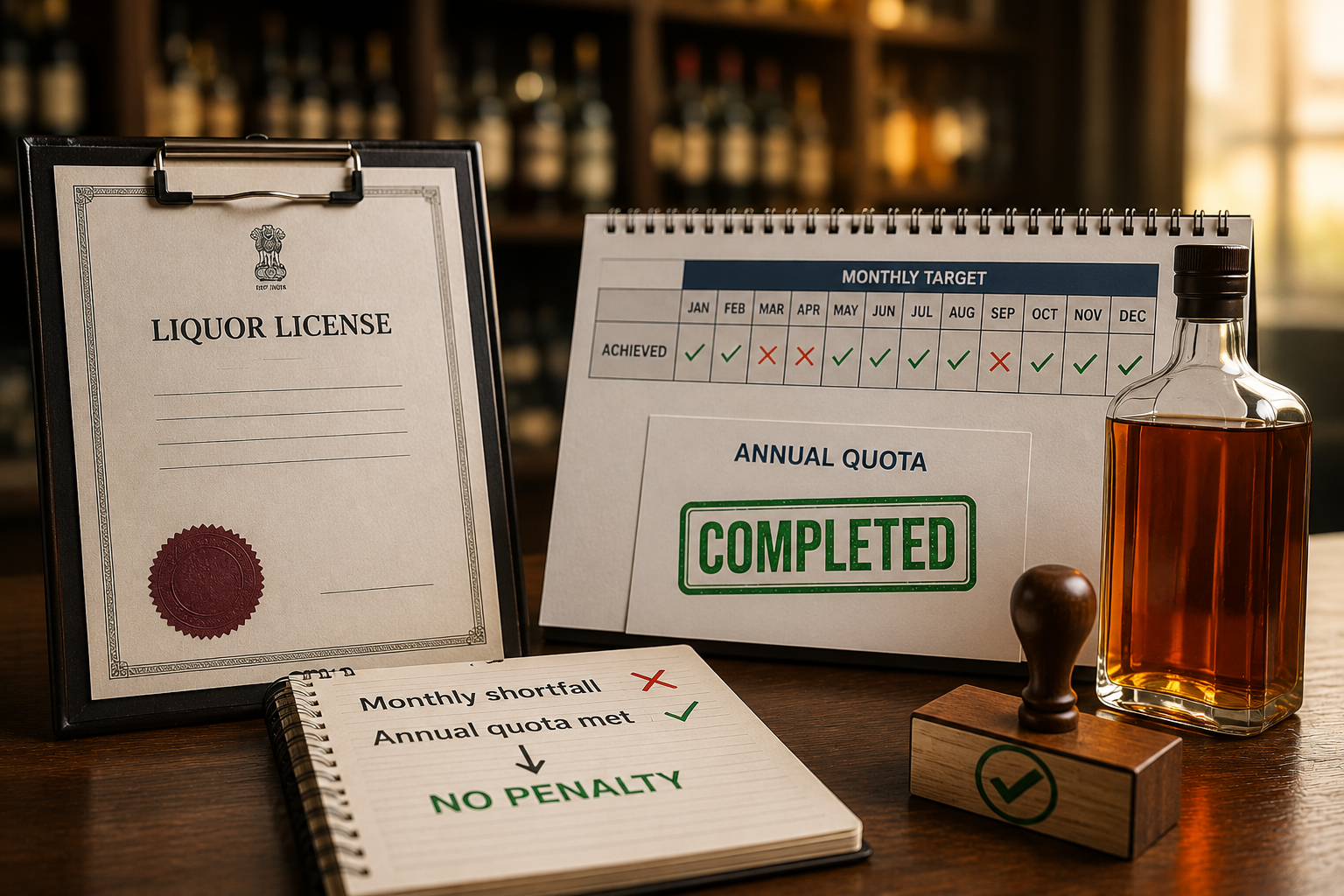
This case concerned the Uttar Pradesh Excise (Settlement of Licences for Retail Sale of Country Liquor) Rules, 2002. The core dispute was whether the State could penalise a retail country liquor licensee for failing to lift the full monthly Minimum Guaranteed Quantity (MGQ) in a particular month, even after the licensee had already lifted the entire annual MGQ and paid the full annual licence fee. After the excise year ended, the State issued retroactive demand notices imposing deficit fees, penalties, and interest, and adjusted these amounts from the licensees’ security deposits. The licensees challenged the demands before the Allahabad High Court, which ruled in their favour. The State then appealed to the Supreme Court.
The key facts
The respondents held retail country liquor licences for the excise years 2006–07 and 2007–08 under the 2002 Rules (para 4). They lifted the entire annual MGQ fixed for both years but fell short of the monthly MGQ in certain months, including March 2008 (para 4; para 5). In March 2009, following a circular from the Excise Commissioner dated 9 March 2009, the District Excise Officer issued demand notices levying deficit licence fees, penalties, and interest (para 4). These amounts were adjusted from the respondents’ security deposits (para 5). The respondents argued that the annual MGQ is an aggregate target and that they were being illegally penalised despite full annual compliance. They filed a writ petition before the Allahabad High Court, which quashed the demand notices and directed the State to refund the deducted security amounts (para 7). The State of Uttar Pradesh and its officers filed Civil Appeal No. 3954 of 2018 before the Supreme Court, contending that the licence terms and Rules 14 and 15 of the 2002 Rules permitted monthly enforcement, that the writ petition was not maintainable, and that the respondents were estopped from challenging the demands after accepting partial refunds (para 6).
The questions before the Court
The Supreme Court was called upon to decide three main questions.
First, whether a retail country liquor licensee who has fulfilled the entire annual MGQ can still be penalised for an isolated monthly shortfall under the 2002 Rules (para 2).
Second, whether the writ petition filed by the respondents was maintainable despite the availability of an appeal under Section 11(1) of the Uttar Pradesh Excise Act, 1910 (para 6).
Third, whether the respondents were estopped from challenging the demand notices because they had accepted partial refunds of their security deposits (para 6).
What the Court decided and why
A Bench comprising Justice S.V.N. Bhatti and Justice N.V. Anjaria dismissed the State’s appeals and affirmed the High Court’s judgment (para 17).
On the central question of liability, the Court held that once a licensee has lifted the entire annual MGQ and paid the full annual licence fee, the State cannot levy deficit fees, penalties, or interest for a shortfall in any individual month. The Court relied on Rule 2(m) of the 2002 Rules, which defines “licence fee” as “the remaining part of consideration for grant of licence for exclusive privilege of retail sale of country liquor… This sum shall be equal to the excise duty leviable on the annual minimum guaranteed quantity fixed for the shop” (para 12.1). The Court observed that the licence fee is distributed over the excise year in monthly instalments, but the obligation is fundamentally annual. To test the State’s argument, the Court posed a hypothetical: if a licensee completes the annual MGQ within six months and continues to pay the monthly instalment for the remainder of the year, should he still be penalised for not meeting a monthly quota later? The Court answered that such a reading would force a licensee to pay both the monthly fee and a penalty without receiving proper credit for the annual quantity already lifted, and the definition of licence fee in Rule 2(m) does not support treating monthly quotas as independent, severable obligations (para 13). The Court further noted that the appellants did not dispute receiving the full annual licence fee, and that non-performance of the monthly MGQ at the time of completion of the licence period was not a ground for penalty under the 2002 Rules or the Form 5-C licence (para 14).
The Court also upheld the High Court’s finding that the demand notices suffered from fatal procedural infirmities. The 2002 Rules require a contemporaneous notice to the licensee under Rule 14(c); however, the notices here were issued retroactively in March 2009, after the lapse of a reasonable time and well after the relevant excise year had ended (para 15). The Court held that these infirmities go to the root of the demand, rendering it arbitrary and unsustainable, and that the High Court was right to quash the notices (para 15).
Regarding maintainability, the Supreme Court affirmed the High Court’s view that an appeal to the Excise Commissioner under Section 11(1) of the Excise Act would not be an adequate remedy because the Commissioner himself had issued the circular that triggered the impugned demands (para 7). On estoppel, the Court likewise affirmed that accepting a partial refund of a security deposit does not bar a licensee from challenging an illegal demand raised before such refund (para 7).
Why it matters
The judgment clarifies that under the 2002 Rules, the licence fee is an annual consideration for the exclusive privilege of retail sale of country liquor and is not severable into twelve independent monthly obligations. For licensees, this means that meeting the annual MGQ and paying the full annual fee provides a complete defence against retroactive demands for isolated monthly shortfalls. The decision also reinforces the importance of procedural safeguards: authorities must comply with the contemporaneous notice requirement under Rule 14(c) and cannot resurrect closed excise years through belated demand notices. Finally, the ruling underscores that when the very authority who would hear an appeal is responsible for the impugned action, the writ jurisdiction remains available. The decision thus strikes a balance between revenue enforcement and protection of licensees from arbitrary, after-the-fact penalties.