
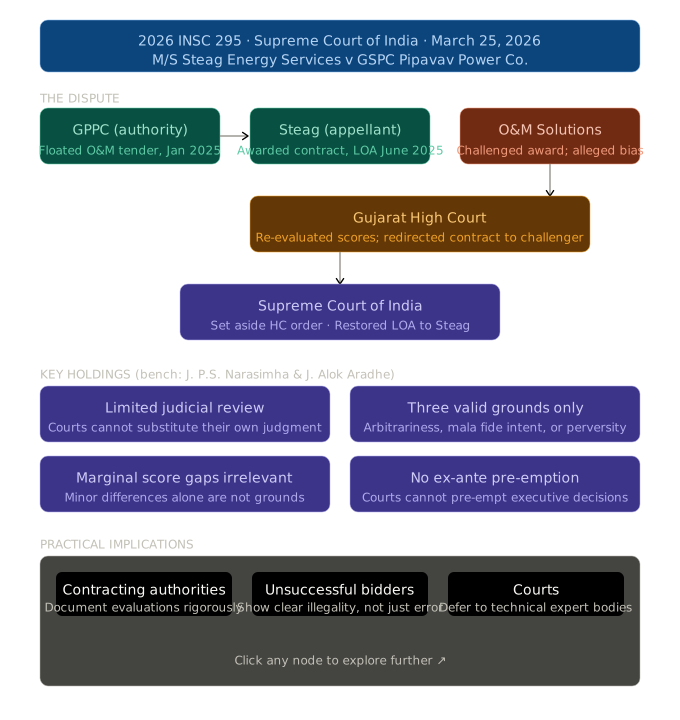
Case: M/S Steag Energy Services (India) Pvt. Ltd. v. GSPC Pipavav Power Company Ltd. & Ors. Citation: 2026 INSC 295 Decided: 25 March 2026 Bench: Justice P.S. Narasimha & Justice Alok Aradhe
Situation
GSPC Pipavav Power Company Ltd. (GPPC) floated a tender in January 2025 for the operation and maintenance of its 702.86 MW gas-based combined cycle power plant, using a Quality and Cost Based Selection method assigning 70% weight to technical evaluation and 30% to financial bids. Steag Energy Services was declared the successful bidder and issued a Letter of Award on 9 June 2025, followed by execution of the contract on 1 July 2025. The unsuccessful bidder challenged the evaluation before the Gujarat High Court, alleging arbitrariness and violation of tender conditions. The High Court directed a re-evaluation of technical scores by a consultant and ultimately redirected the contract to the challenger. Steag appealed to the Supreme Court.
Evaluation
The Supreme Court examined the central question: whether a High Court can substitute its own assessment for that of a specialist evaluation committee when reviewing tender awards. The Court found that the evaluation process was conducted in accordance with the tender guidelines and did not suffer from arbitrariness or mala fide intent, and that marginal differences in scoring between bidders do not, by themselves, warrant interference. The Court observed that judicial review must balance justice with flexibility, requiring courts to exercise nuanced discretion between multiple outcomes and binary choices, so that judicial wisdom does not undermine the purpose of the tendering process — failing which it becomes difficult to maintain equilibrium between the need for market certainty and fair play in action.
Takeaways
Courts must adopt a restraint-based approach when reviewing technical and commercial decisions. Arbitrariness, mala fide intent, or perversity remain the primary grounds for judicial interference, and the discretion of the tendering authority must be respected in the absence of fundamental procedural violations. The Supreme Court concluded there was no justification for the High Court’s interference and upheld the Letter of Award and the contract, setting aside the High Court’s direction to grant the contract to the writ petitioner.
For practitioners: contracting authorities should maintain meticulous evaluation records; unsuccessful bidders must demonstrate clear illegality rather than mere disagreement; and courts should defer to the expertise of specialist procurement bodies unless a fundamental violation is made out.