
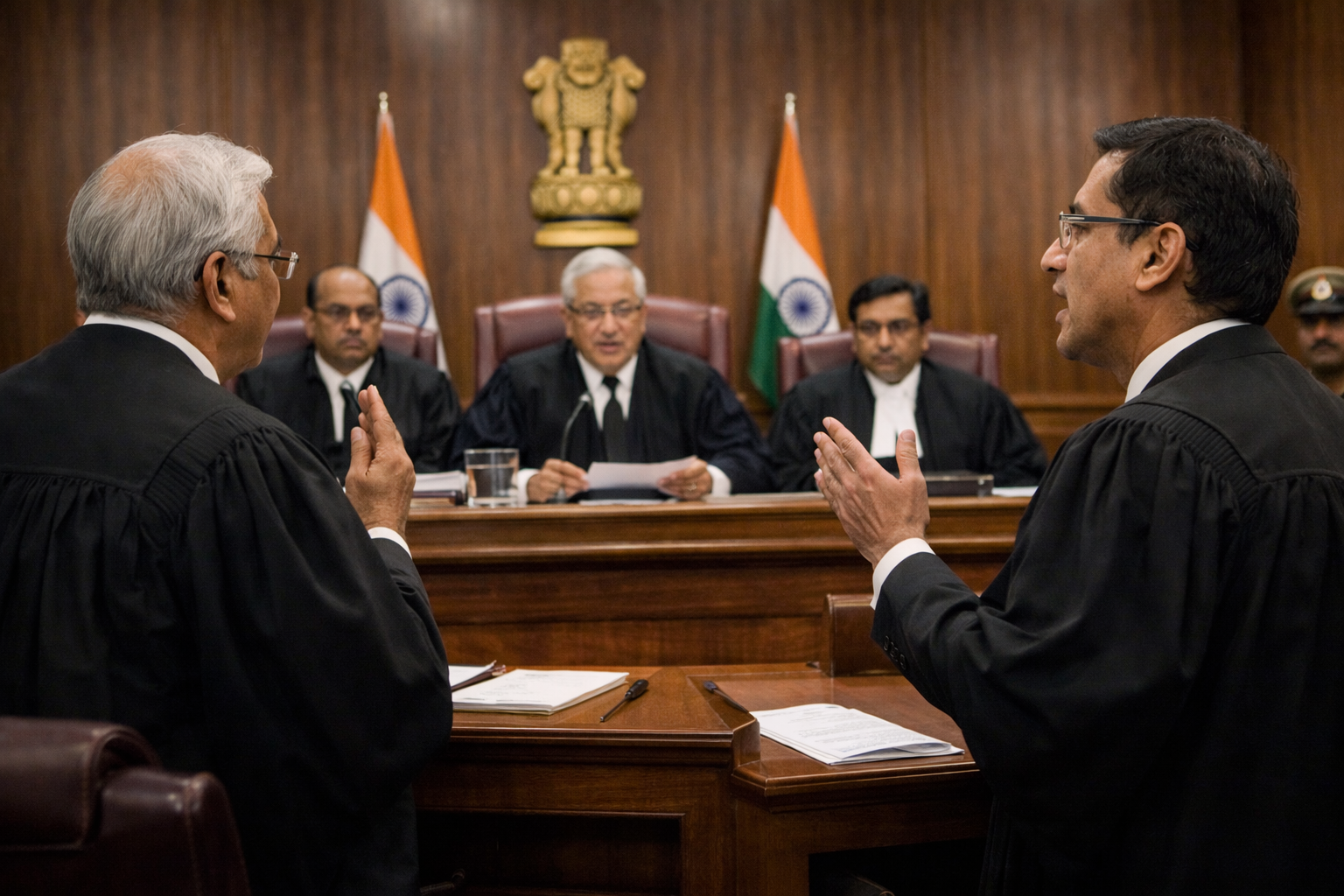
Here are the key legal and factual arguments being presented in the Supreme Court of India in the case challenging the preventive detention of Sonam Wangchuk under the National Security Act (NSA), 1980:
⚖️
Main Arguments by the Petitioners (Wangchuk’s Side)
🟢 1.
Violation of Constitutional Rights (Article 22)
- Senior Advocate Kapil Sibal argues that the detention violates Article 22 of the Constitution, which provides procedural safeguards for detainees.
- The petition claims that the grounds of detention were not adequately supplied to Wangchuk before issuing the order — meaning he was denied a fair right to make an effective representation.
- Key material such as the four video recordings relied upon by authorities were not furnished in time, limiting his ability to properly defend himself.
- The petitioners say the detaining authority did not apply its mind properly and relied on irrelevant or stale material.
🟢 2.
No Causal Link to Violence
- Wangchuk’s lawyers argue there is no proximate connection between his speeches or actions and the violent protests that occurred in Ladakh on 24 September 2025.
- They say the speech excerpts cited were taken out of context or misrepresented. Some parts of his speech actually condemned violence and urged peaceful protest.
🟢 3.
Selective & Misleading Use of Material
- The petitioners contend authorities presented only selective slices of videos and transcripts, omitting wider context that showed Wangchuk’s intention was peaceful protest and dissent, not incitement.
- The Supreme Court has flagged discrepancies between government transcripts and actual videos. The Court has ordered sealed production of original videos to verify accuracy.
🔵
Arguments by the Government (Centre / Respondent)
🔵 1.
Necessity for Preventive Detention
- The Union government asserts that Wangchuk’s speeches went beyond legitimate dissent and were capable of arousing public disorder and threatening national security in a sensitive border region like Ladakh.
- Solicitor General Tushar Mehta argued that references by Wangchuk to uprisings in other countries and invocation of youth protest sentiments made the situation potentially volatile and justified preventive action under the NSA.
🔵 2.
All Procedures Followed
- The government maintains that all statutory safeguards under the NSA and Article 22 were followed.
- Authorities claim that grounds of detention were communicated properly to Wangchuk, and that the district magistrate’s decision to detain was based on material showing activities prejudicial to national security and public order.
🔵 3.
Health Grounds Rejected
- The government told the Court that Wangchuk’s health is “fit and hearty,” and there is no basis to release him on medical grounds.
- They informed that he has been examined repeatedly and is receiving treatment for minor ailments, declining the argument that his detention conditions warrant release.
🏛️
Interventions and Questions by the Supreme Court
The Supreme Court itself has raised some significant points and doubts during hearings:
❓ 1.
Doubt Over Interpretation of Speeches
- The Bench questioned whether the way authorities interpreted certain parts of Wangchuk’s speeches is fair or goes beyond what he actually said. In particular, the Court observed some speeches reflect concern over youth abandoning non-violent protest rather than inciting violence.
❓ 2.
Accuracy of Transcripts
- The Court noted discrepancies between government-provided transcripts and what might actually have been spoken in the videos and has insisted on production of the original speech videos for verification.
📌
Legal Themes at the Heart of the Case
| Issue | Petitioners’ Claim | Government Position |
| Free Speech vs. Public Order | Wangchuk’s speech was peaceful dissent | Speech could enable unrest |
| Procedural Fairness | Grounds and material not shared properly | All procedures complied |
| Relevance of Evidence | Selective, taken out of context | Material shows threat |
| NSA Application | Misuse of preventive detention | Legitimate use to prevent disorder |